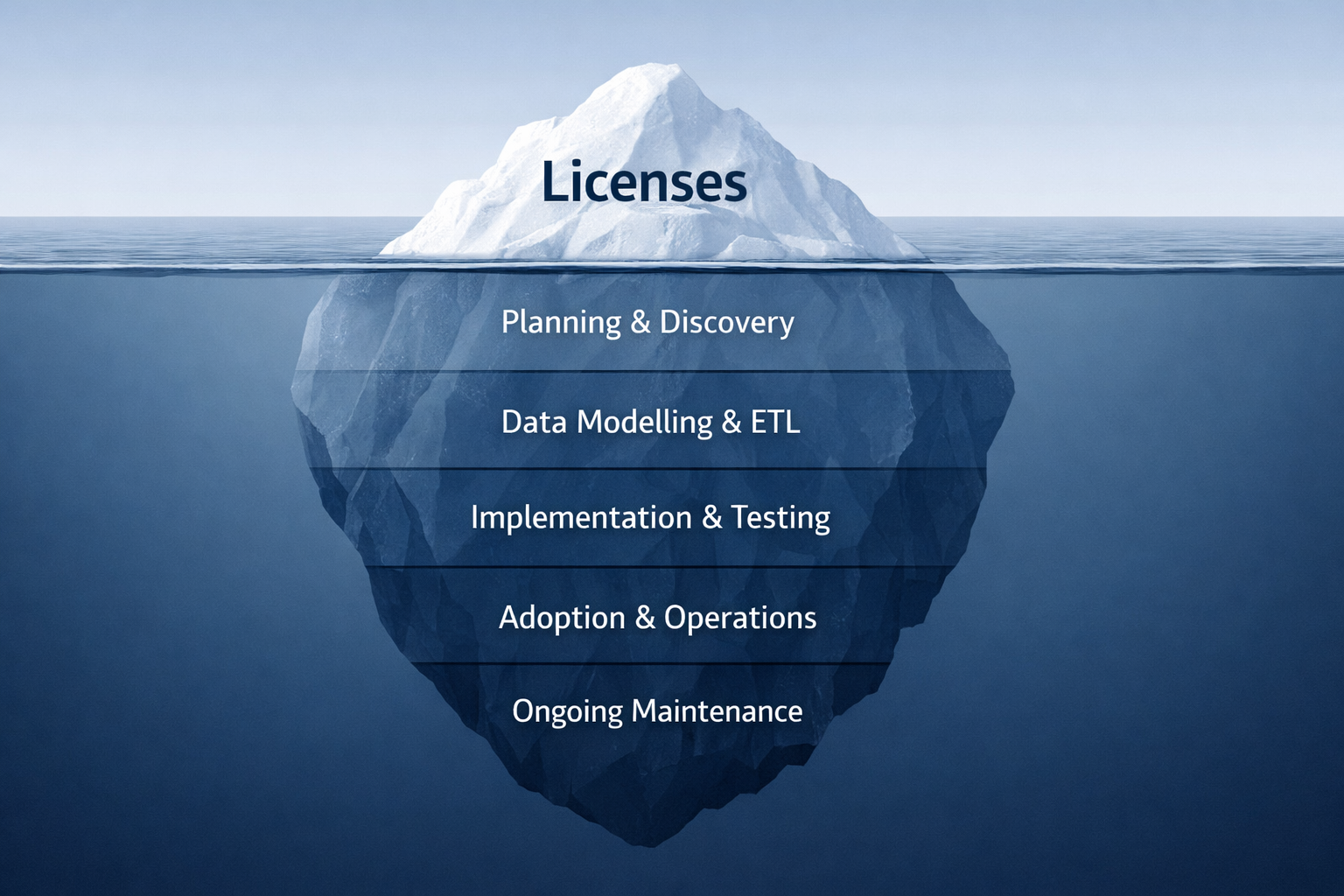
Modern hospitals already rely on a wide range of digital systems to support clinical, administrative, and operational tasks. These systems generate valuable information every day, and much of this information is already used effectively in local workflows. As the volume of data increases and expectations around efficiency grow, hospitals look for practical ways to ensure that this information remains consistent, accessible, and easy to integrate into everyday decision-making. Data automation helps meet this expectation by creating stable, repeatable processes for collecting and preparing data, so teams can focus on interpretation and action rather than manual preparation.
In many hospitals, teams understand their data well and have clear questions they want answered. Automation builds on this knowledge. Instead of replacing existing practices, it enhances them by ensuring that information moves smoothly from operational systems to a central analytical environment. The result is a steady improvement in how the organisation works with data: fewer delays, clearer insights, and more time for activities that require expertise.
Table of Contents
Integrated, Automated Data as a Natural Extension of Hospital Operations
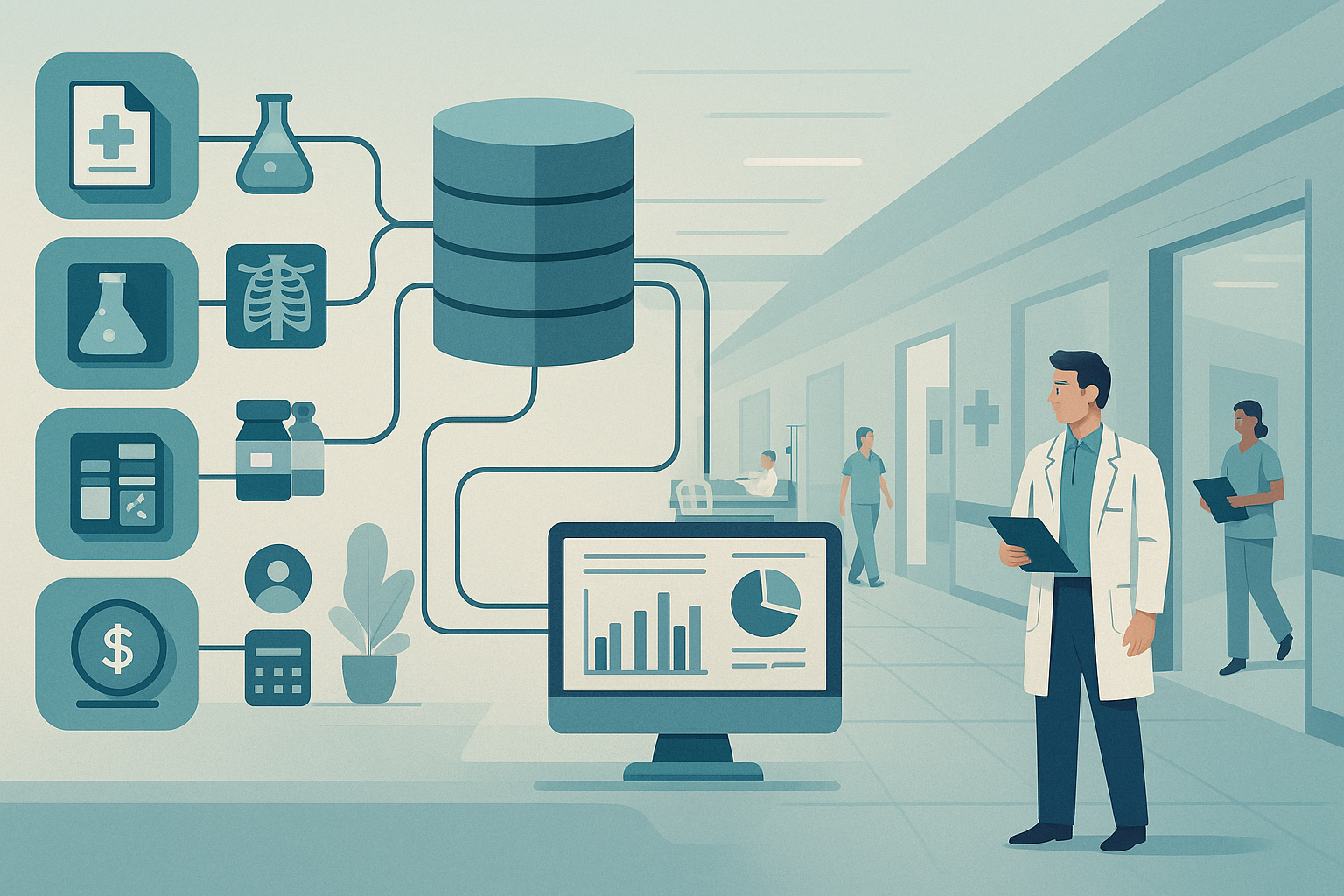
Healthcare environments rely on specialised systems such as Hospital Information Systems (HIS) platforms, emergency care modules, surgical planning tools, pharmacy applications, HR systems, and finance platforms. Each of these systems fulfils its role effectively, and each produces data that contributes to the hospital’s understanding of patient flow, resource allocation, and organisational performance. The challenge is not the systems themselves, but the effort required to combine their outputs into a unified picture when this process depends on manual work.
Automated data flows act as a structural layer between these systems. They ensure that information is collected in a predictable way, transformed using consistent rules, and delivered into a unified model without interrupting daily work. The hospital’s existing strengths — strong departmental processes, clear documentation standards, experienced teams — remain in place. Automation simply reduces the operational weight behind repetitive data tasks.
When automated pipelines feed an analytical environment, the information becomes more stable and easier to interpret. Bed occupancy, medication usage, staffing patterns, financial indicators, and quality metrics can be viewed together with greater continuity. Teams already familiar with their workflows gain an expanded view of how their work connects with other parts of the hospital. This perspective supports smoother coordination and helps leaders make decisions based on shared, up-to-date information.
How Data Automation Enhances Key Hospital Activities
Automation blends naturally into areas where data is already collected regularly. Bed management, for example, often depends on occupancy data that must be updated across the day. Automating this flow ensures that the information remains timely without requiring additional manual reporting. This supports smoother planning for admissions, transfers, and discharges, especially when activity levels change unexpectedly.
In surgical departments, systems already capture detailed timestamps for procedures, preparation periods, turnover times, and cancellations. Automated integration brings these values together into a coherent structure so that patterns become easier to see over time. Coordinators and leadership teams gain clarity without needing to request new extracts or assemble additional reports.
Administrative and financial processes also benefit from steady, automated data movement. Many hospitals already maintain strong internal checks for documentation and coding. Automation enhances these efforts by applying validation rules continuously, making it easier to identify items that require attention before they reach external reporting or settlement cycles. Month-end activities become more predictable because the supporting data model has already been refreshed and aligned.
Quality monitoring follows a similar pattern. Indicators such as process milestones, emergency timelines, or infection-related metrics are captured in existing systems; automation simply ensures that they appear in the analytical layer without delay. This provides quality teams and clinicians with consistent visibility, helping them refine processes and maintain standards.

Reducing Manual Effort While Preserving Existing Expertise
Manual spreadsheets and one-off extracts are still useful when a team needs a quick, ad-hoc analysis. Automation does not replace this role — it reinforces it. When pipelines manage the mechanical aspects of data preparation, analysts spend more time exploring trends, helping departments understand patterns, and discussing what actions make sense.
A recent overview of 32 hospitals in France shows how this works in practice. Many of these hospitals already use clinical data warehouses that automatically combine administrative, laboratory, pharmacy, billing and clinical data into one place. Thanks to this setup, their teams spend less time rebuilding spreadsheets and more time working with reliable, up-to-date information.
Manual spreadsheets and one-off extracts may still be useful for ad-hoc analysis or specialised questions. Automation simply ensures that core reporting — the type used frequently by leadership and departments — has a stable foundation. This stability allows teams to move beyond repetitive formatting tasks and focus on insights that support planning, coordination, and long-term improvement.
Because automated reports refresh according to an agreed schedule, trust in the underlying information increases. Departments no longer need to compare multiple versions of the same dataset, and discussions become more focused on interpretation rather than reconciliation. A shared analytical environment encourages collaboration, not because previous practices were ineffective, but because the effort needed to maintain common definitions becomes lighter.

Building an Environment Where Automation Supports Everyday Decisions
Introducing automation in a hospital works best when it builds on existing strengths: clear processes, engaged teams, and well-understood operational needs. The starting point is identifying which sources provide essential data and how departments currently use them. Workshops with medical, operational, and administrative teams help clarify what questions are most relevant and which indicators should be standardised across the organisation.
Once the data model and pipelines are designed, automated reporting gradually replaces the need for manual extraction and repeated spreadsheet work. This change does not disrupt established workflows; instead, it supports them by providing reliable information at the moment it is needed. Over time, teams become accustomed to working with continuously updated data, and analytical conversations become more forward-looking because the underlying information is stable and easy to access.
The overall effect is a hospital environment where data supports work in a natural, unobtrusive way. Decisions benefit from better visibility, departments coordinate more easily, and administrative teams spend more time on tasks that require judgement and experience. Automation strengthens the organisation’s analytical foundations without altering the essential role of people, processes, and clinical expertise.


Contact
Take your business to the next level with transparent business reporting
Choose a responsible partner with extensive experience who will provide real support for your team.