
If you are curious about the cost of implementation of Business Intelligence systems, you are already asking the right question. Most teams start with license pricing, but the real budget sits in delivery work, internal involvement, and long-term maintenance. A BI project can be a small pilot or a company-wide data platform. These two options are not remotely comparable in cost. What matters is not “How much is BI?” but “What scope are we implementing, and what operating model are we choosing?”
Table of Contents
Business Intelligence is often associated with dashboards. In reality, dashboards are the visible layer of a deeper structure. A useful way to estimate cost is to look at the Total Cost of Ownership.
In practice, BI cost is usually built from:
- Planning and discovery work (requirements, KPI definitions, source mapping)
- Licensing and infrastructure (cloud capacity, user licensing, security setup)
- Implementation services (data modelling, ETL/ELT pipelines, reports, testing)
- Adoption and operations (training, support, ownership model, change process)
- Ongoing maintenance and development (new reports, source changes, performance tuning)
This is why two companies can pick the same tool and still end up with very different budgets.
What changes the price the most
Scope and operating model set the baseline because they define how much work must happen before anyone sees usable dashboards. License pricing is visible, yet delivery effort and internal time usually shape the budget more.
When data comes from an ERP, a CRM, spreadsheets, and e‑commerce exports, the team must map fields and reconcile definitions, so alignment work grows. For example, revenue can mean invoice date in finance and order date in sales, therefore you need explicit rules and a single source of truth. If the chart of accounts changes or cost centres are inconsistent across systems, the model requires additional transformation steps, which extend delivery.
Refresh rules add effort as well. A daily sales dashboard with late‑arriving data needs backfill logic and validation, so testing expands. Security rules add work when access must follow department, region, or customer segment, because you have to design, test, and document row‑level access. Internal availability matters too; when business owners review definitions less frequently, feedback cycles slow down and the plan grows.
Three common implementation scenarios
In BI projects, three patterns show up often, and they help explain why cost varies even with the same tool.
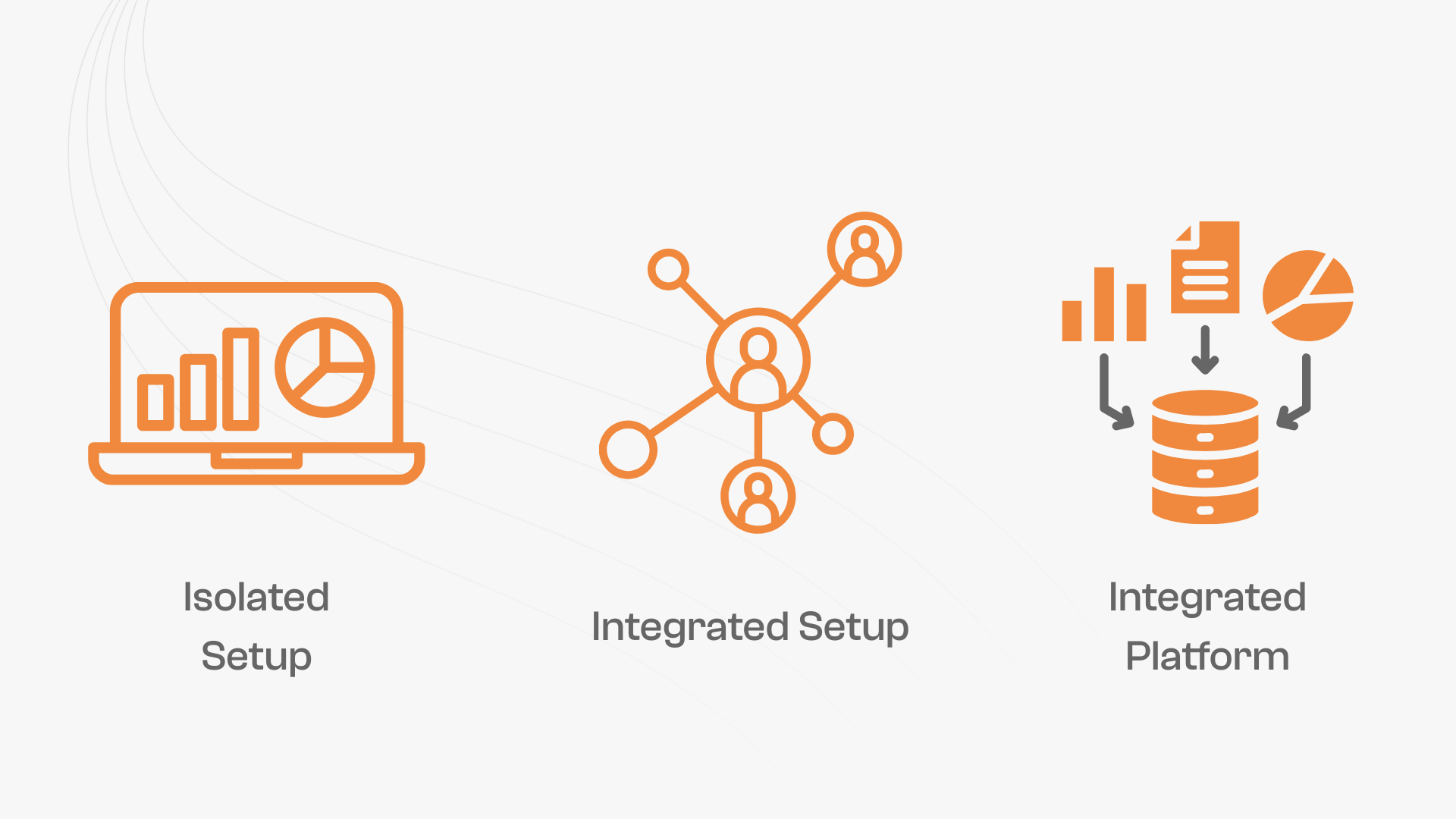
- A focused pilot is typical when one area needs reporting for a narrow set of decisions. Data sources are limited and the model can stay compact. Cost is lower, yet later expansion may require rework if definitions were not designed for scale.
- Shared reporting across teams adds alignment work. Several departments need consistent numbers and shared definitions, which means more workshops and governance. Validation takes longer because the logic must hold across different contexts.
- A data platform foundation plus reporting is used when data quality and stability are the main risks. This includes pipelines and quality checks before reports are built. Cost is higher at the start, with better long‑term stability and fewer emergency fixes.
Hidden costs that are easy to miss
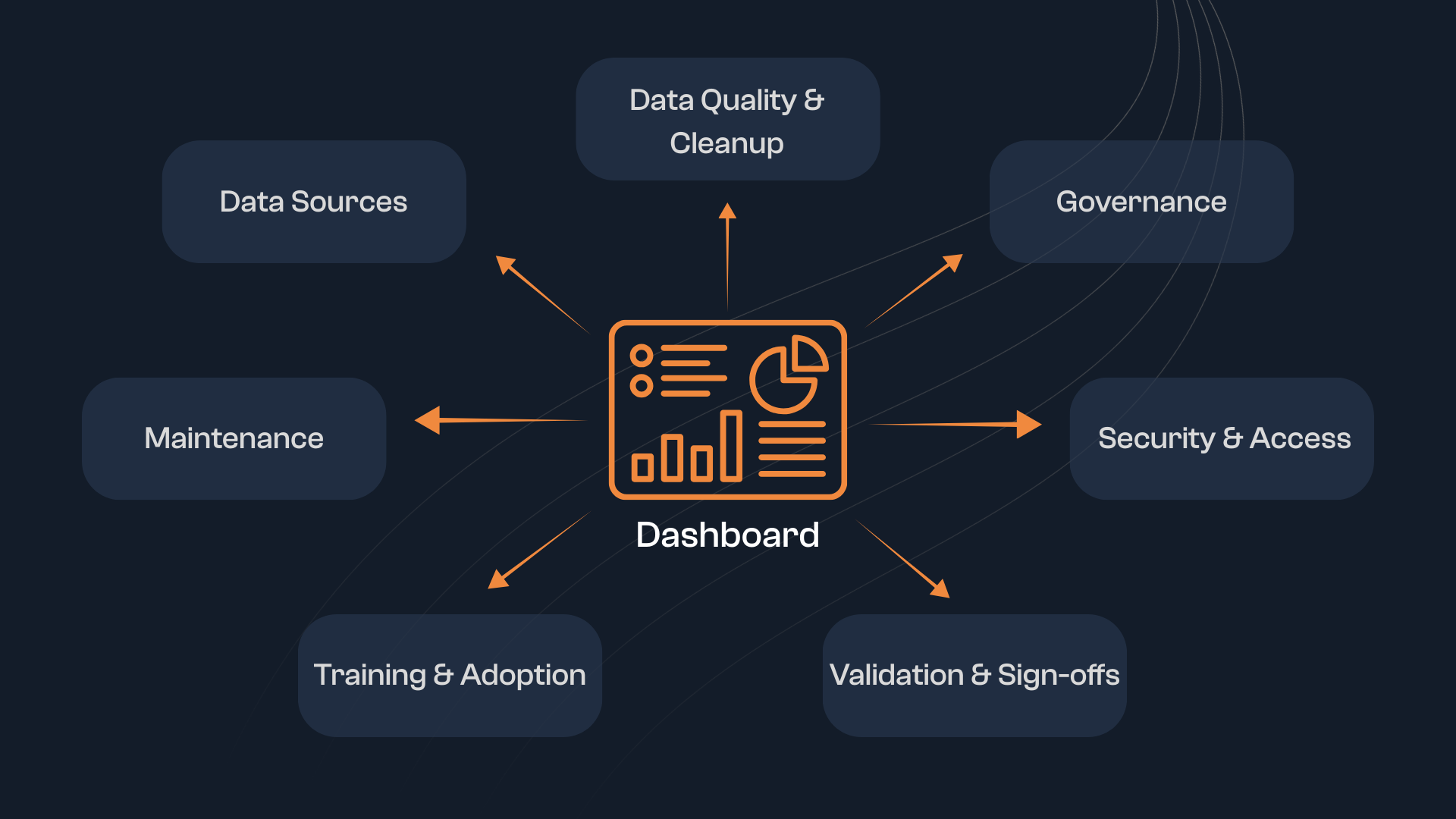
Work outside the dashboard often adds more effort than expected, and the reason is usually found in data readiness and decision‑making time.
After discovery, teams often find missing IDs, duplicate customers, or inconsistent product codes, so they must add cleanup steps and agree on master data rules. Internal validation takes longer when numbers affect incentives, budgets, or commissions, therefore sign‑offs require extra review rounds. Access and security reviews add time when legal or IT must confirm data usage, retention, or audit requirements, and these reviews often run in parallel to development rather than after it. Training and onboarding take effort because users need to understand filters, definitions, and reporting cycles; otherwise, they keep exporting to Excel. Ongoing changes continue because new sources appear, reporting logic evolves, and each source update triggers a small round of regression checks.
These items are normal, and they add real effort even when the tool is already selected.
How to control BI cost without reducing value
Cost control works best when scope and ownership are clear, because that limits rework and keeps decisions moving.
Start with the decisions the first release must support, and then align the scope to that list. If you focus on what actually drives decisions, you avoid building reports that look useful but do not change actions.
Next, prioritise data sources by business impact, so the team works on the inputs that matter most instead of the easiest ones. Build reusable definitions and models early, so later additions cost less and stay consistent. Assign ownership for changes and support, because a clear process prevents stalled approvals and repeated fixes. Plan a steady improvement cadence, since ad hoc requests usually add cost and slow delivery.
This approach keeps value intact while keeping delivery predictable. However, what if you feel like it’s too much work at the moment? Don’t worry, that’s where we’ve got your back – this is exactly what we do on an everyday basis. We are experts in analytics and data warehousing – we help companies to utilise their data: from strategy, through analytics and data warehousing, to automation and AI. Check out our Data-Driven Starter – a 2-day service with a senior data consultant to explore how data can support your business, assess your situation, and provide a report with recommendations and next steps.
Don’t hesitate to contact us using the contact form below – book your first free consultation with our expert now!


Contact
Take your business to the next level with transparent business reporting
Choose a responsible partner with extensive experience who will provide real support for your team.